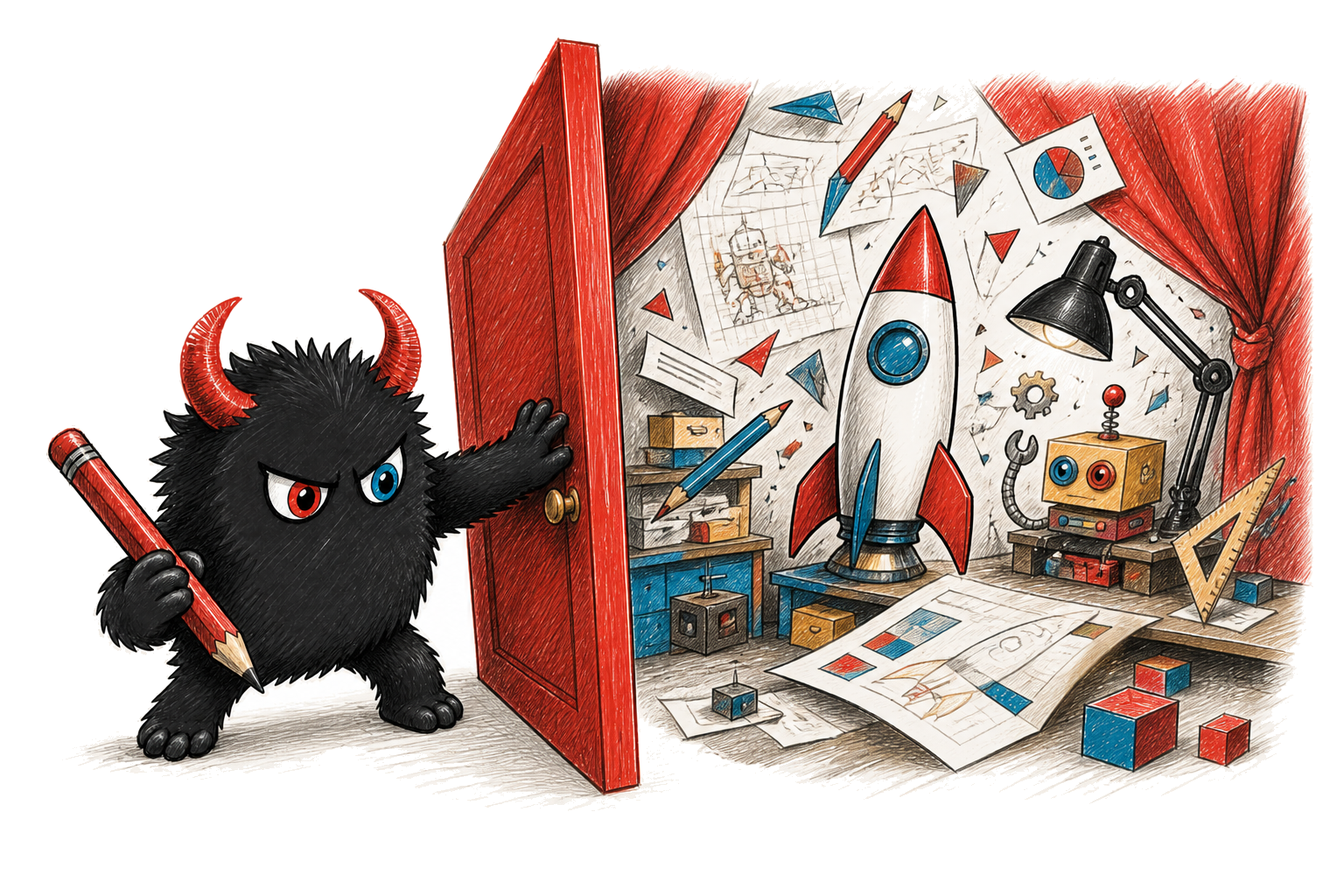
The original monster returns
Omaha Media Group began in 2003 with a simple belief: ambitious organizations deserve design and technology built around their actual problem. Twenty-three years later, OMG is returning with that belief intact and a sharper purpose.[1]
OMG is now the custom design studio within Monstrous Media Group, personally led by founder Brad Nietfeldt. It exists for the projects that require senior attention, unconventional thinking and a willingness to build beyond the obvious answer.
Experience without the layers
Brad’s path spans the infancy of PayPal, lead development work at eBay, major Omaha brands, national companies and family offices around the world. The relaunch brings that experience directly into a focused studio model.[2]
Clients come to OMG for brand systems, custom websites, digital products and difficult problems that do not fit a standard agency assembly line. The work is collaborative, detailed and intentionally selective.
A birthday and a beginning
Launching on August 24, Brad’s 48th birthday, feels appropriately personal. OMG has always carried his design spirit, curiosity and determination to make useful things impossible to ignore.[3]
The monster is back. The pencils are sharp. If the brief is unusual, the ambition is real and the budget can support the work, let’s talk.
Start with the business decision
The useful way to approach omg is back, a founder-led design studio for the unusual is to begin with the decision the organization is trying to improve. For ambitious leaders who want direct senior creative and technical judgment, the real assignment is relaunching Omaha Media Group as a selective founder-led studio for unusual digital and brand assignments. That is more specific than asking for more traffic, a fresher look or a new tool. It identifies who needs to gain confidence, what evidence they need and what the business should be able to do after the work is complete. A clear decision gives strategy, content, design and development one shared target.[4]
Write that decision in plain language before selecting tactics. Name the audience, the moment they are in, the obstacle that prevents progress and the action that would represent meaningful movement. This short brief becomes a filter for scope. It also exposes requests that sound urgent but do not contribute to the result. The desired destination here is special projects shaped by Brad Nietfeldt with the resources of Monstrous Media Group. Every page, workflow and measurement choice should make that destination more likely.
Build from evidence, not assumptions
Good digital work combines internal knowledge with observable behavior. Interview the people who speak with customers, review search queries, inspect analytics, read support questions and examine the materials that already help close decisions. Those sources reveal the language people use and the proof they require. They also prevent a team from mistaking its organizational chart for a customer journey. The cited industry guidance below provides an external baseline, but the strongest content will include experience that only the organization can contribute.[1]
Evidence should remain visible in the finished experience. Specific examples, named methods, accountable authorship, current dates and clear sources make an article more useful to readers and easier for retrieval systems to evaluate. Structured data can describe those elements, but it should mirror the page rather than decorate it with unsupported claims. This article therefore pairs visible authorship, dates, citations and related reading with machine-readable Article, Breadcrumb and FAQ information.
Design the path, not only the page
A useful article is part of a larger knowledge system. A reader may enter with a broad question, need a concise answer, compare options, inspect evidence and then decide whether to contact a specialist. Headings, summaries and internal links should support that progression without forcing a linear read. The three related OMG links included with this guide connect the subject to a deeper service, a relevant perspective and a direct next step. That is helpful navigation for people and meaningful context for crawlers.[2]
The same principle applies beyond content. Forms, calls to action, menus and follow-up messages should respect the amount of confidence a person has earned at each point. A first-time visitor may need orientation. A returning buyer may need a specific proof point. Someone referred by a trusted peer may only need confirmation and an easy way to start. Designing these states creates a more useful experience than repeating the same sales prompt after every paragraph.
Make the system operational
A strong launch needs ownership. Decide who can update the information, who approves material claims, how frequently sources are reviewed and what happens when a service or policy changes. Create reusable editorial fields for the title, summary, author, publication date, image, citations, related links and structured data. The goal is not more administration. It is to make quality repeatable without depending on one person remembering every technical requirement.[3]
This is also where teams should guard against forcing an unusual problem through a standardized agency assembly line. A pre-publication checklist can confirm that the page offers original value, cites important factual claims, includes descriptive link text, uses accessible image alternatives and sends a valid canonical signal. After publication, the same owner can review search coverage, referral traffic and user behavior. Small, regular stewardship is far less expensive than letting an entire content library drift out of date.
Measure the signal that matters
Measurement should reflect the purpose of the resource. For this subject, a useful scorecard includes clarity, originality, usefulness, craft and durable client value. Those indicators work together. A single number can be misleading, but a pattern across discovery, engagement, movement and business quality can show whether the page is doing its job. Establish the baseline before major changes, annotate launch dates and allow enough time for search systems and customers to respond.[4]
Review the article with sales, service and leadership teams, not only the analytics dashboard. Ask whether it answers a real question, attracts the right conversations and reduces repeated explanation. Update examples when the market changes and retire claims that can no longer be supported. The best search and LLM inclusion strategy is a trustworthy publishing practice: expert-led information, visible evidence, crawlable technical foundations and a point of view worth citing.
Turn the guidance into a ninety-day plan
In the first thirty days, document the present state and agree on the decision that matters. Gather customer questions, analytics, search data, existing creative materials and the operational constraints that could affect delivery. Use the next thirty days to produce the highest-value improvements, review them with the people closest to customers and test whether the new experience communicates the intended meaning. The final thirty days should focus on publishing, measurement and a short backlog informed by real behavior rather than guesses.[1]
Keep the plan deliberately small enough to finish. Assign an owner, a review date and one observable outcome to every action. Preserve the research and decisions in a shared record so future contributors understand why the system works the way it does. This creates a practical bridge between strategy and stewardship. It also gives leadership a clearer view of investment: what changed, what the team learned, what business signal moved and what deserves attention next.